

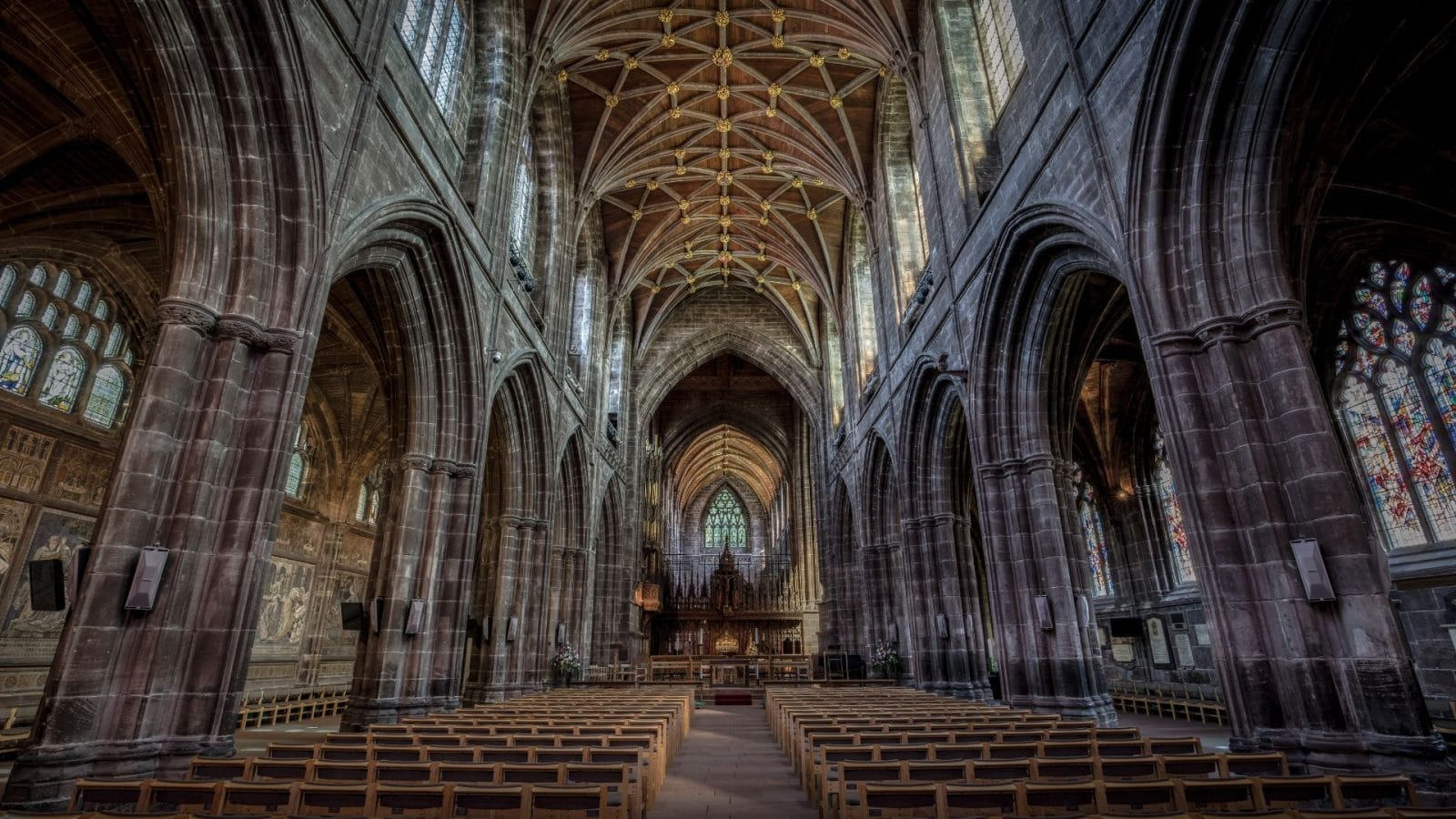
Sacred architecture is the design and construction of buildings intended to channel spiritual energy and create harmony between humans, nature, and the divine.
Feng Shui and the Art of Sacred Architecture

All peoples and civilizations have developed architectural forms to channel the sacred. Even cultures like the Celts, who used Nature itself as their temple, did not choose just any spot for their ceremonies. They sought out places where the lines of the land suggested special energy. Most of us can feel these energies make us feel good or uncomfortable in certain locations.
Among those who wrote the most on this subject were the Chinese. They called it Feng Shui—the art of understanding the energies of a place by studying the shape of its landscape.
Feng Shui and the Blueprint of the Sacred
In Chinese, Feng (or Fong) means “wind,” and Shui means “water.” This science teaches us how important nature is, and how its shapes can reveal the energies present in a location. The shape of the landscape matters, but so do winds, directions, and certain astrological influences. These are measured with a special, complex instrument called the geomantic compass.
In the past, the Chinese would never build a structure, especially a temple, without first consulting a geomancer to choose the most suitable spot or to suggest design elements to counteract negative influences in the area. Even today, in places like the United States, it’s not unusual for business owners to seek a Chinese geomancer’s advice. Sometimes, a few small changes in the décor are enough to improve business. Whether this is simply fashion or genuine effectiveness, it often works.
The methods and practical uses of Feng Shui date back to the Song Dynasty (1126–1278). The energy of Nature—called Prana in India, Ankh in ancient Egypt, and Qi in China- follows specific laws.
In China, these laws are called Li. Physics today would describe them as mathematical principles, known there as Shu, which give shape to Nature, called Ying (not to be confused with the Yin of Yin–Yang). In Feng Shui, energy follows laws, takes on shapes, and molds the landscape.
Many of Feng Shui’s most energetic places appear in the sacred geography of many other cultures, including our own.
Feng Shui masters consider:
Landscape shapes and contours
Wind patterns and air flow
Sunlight and orientation
Astrological influences
For example, in flat or gently rolling terrain (yin), the best place to build is on the highest point—like churches often built on the only hill in the area. In steep, mountainous terrain (yang), the ideal site is a gentle valley, where we also often find churches in mountain regions.
The Role of Natural Energy in Spiritual Building Design
Feng Shui advises against building next to straight or broken lines, such as roads or railways, unless measures are taken to counterbalance their negative effects. Loose rocks or bare stones should also be avoided unless covered with vegetation. Mountains and hills were considered most beneficial when covered in trees—blending ecological awareness with the mystical.
Mountain shapes were especially important.
The five elements—Wood, Fire, Earth, Metal, and Water were linked to natural forms, seasons, planets, colors, and even human organs:
Cone-shaped peaks related to Fire and Mars.
Tall, flat-topped mountains resembled wooden stumps and were linked to Wood and Jupiter.
Peaks that rose and ended up in flat plains were linked to Earth and Saturn.
Jagged summits were tied to Water and Mercury.
Rounded peaks, similar to cones but softer at the top, were linked to Metal and Venus, and symbolized the spiritual spark in humans.
Rounded hills were so positive that many cultures built artificial ones in this shape, from prehistoric dolmens like Antequera to Chinese constructed mounds—sometimes in other shapes as well, to harmonize energies.

Each element was also associated with a weather pattern:
Wood with wind
Fire with heat
Earth with humidity
Metal with dryness and fair weather
Water with cold
In the great forces of Nature, the Blue Dragon (Yang) and the White Tiger (Yin) were vital. If facing south, the ideal location had higher mountains (Yang) to the left and gentler hills (Yin) to the right, with the meeting point of both—favoring Yang—being the best spot.
Sacred Architecture & Aligning with the Cosmos
Sacred architecture is about more than finding the right location. It also shapes the building to act as a resonating chamber for spiritual energy, lifting human consciousness.
Numbers and shapes have special importance: the square or cube (4), the octagon (8), and the circle or sphere (?).
In Christianity, octagonal buildings were often used for baptisteries or funeral chapels—symbols of entering or leaving life. The Knights Templar favored this design. The famous Baptistery of Florence, with Lorenzo Ghiberti’s “Gates of Paradise,” is one of the most renowned.

The Geometry of Spirit
Why the octagon?
Ancient peoples saw a supreme Divinity, called by many names. The philosopher Plotinus called it “the One,” above all manifestation. From the One comes the first duality (Yin and Yang), represented by the number Two—the material world. One represents the spiritual and unmanifested.
But in our world, we need a number that links spirit to matter. Since One is unmanifested, the first odd number beyond it—Three—becomes the spiritual presence in the material world. Combining Two (matter) and Three (spirit) multiplies their potential: 2³ = 8.
Thus, the number Eight represents the potential of the material when animated by the spiritual. In the I Ching, Yin is shown as a broken line (_), Yang as a solid line (__). In groups of three, these create the eight trigrams, each symbolizing a universal law or possibility—Creativity, Receptivity, Movement, Depth, Stillness, Penetration, Clarity, and Joy.
When paired, these trigrams form 64 hexagrams, representing the laws of change. Reducing 64 through numerology (6 + 4 = 10, 1 + 0 = 1) returns us to the One—the source of all.
Feng Shui and the Blueprint of the Sacred
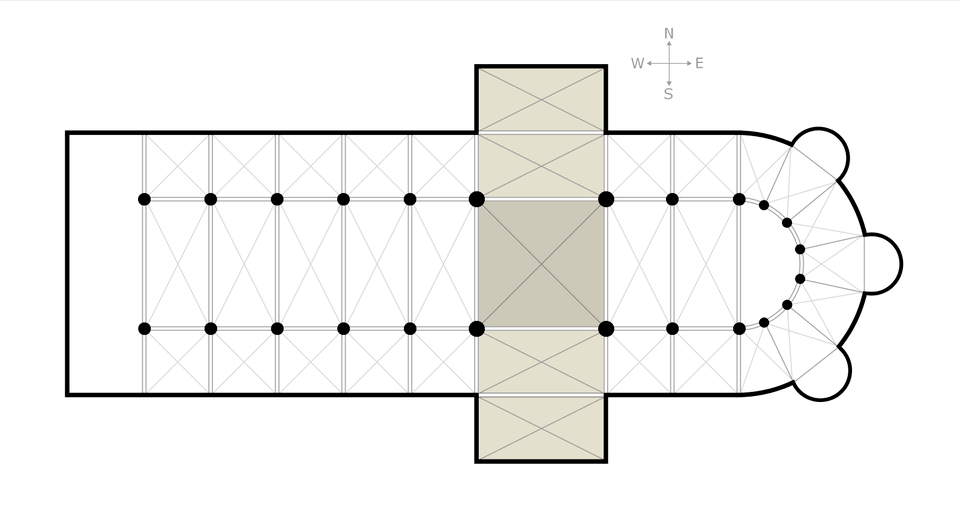
In architecture, the square (linked to the material) and the circle (linked to the divine) find their bridge in the octagon.
Most churches follow the Latin cross plan, which can be “unfolded” into the shape of a cube. Above the central area—a square—rests a dome, symbolizing the heavens. Between cube and dome lies the octagon, the “path” between matter and spirit.
The cube, the sphere, and the octagon are perhaps the three most important elements in Sacred Architecture—a fascinating meeting of archaeology, mathematics, and symbolism.
You might like to read: The Path to Sacred Geometry


OMTimes is the premier Spiritually Conscious Magazine. Follow Us On Facebook, Twitter, Instagram, Linkedin, Pinterest, and Youtube


